Vitamin C and zinc are the two micronutrients most often sold for "immunity", and the science behind them is more specific than the marketing. Both are genuinely required for normal immune function — vitamin C for white-blood-cell activity and antioxidant defence, zinc for the development and signalling of immune cells — and a shortfall in either measurably weakens the response to infection. What they do not do is prevent every cold. This article separates the two, gives the Indian RDA figures, and explains what to look for in a chewable tablet.
What vitamin C does — and doesn't do
Vitamin C (ascorbic acid) is a water-soluble antioxidant that the human body cannot synthesise. It is needed to make collagen, to absorb non-haem (plant) iron, and to support the activity of neutrophils and lymphocytes — the cells that respond first to infection. Because it is water-soluble, the body keeps very little in reserve; intake has to be regular.
On colds specifically, the evidence is consistent and modest. Large reviews, including the Cochrane analyses of vitamin C trials, find that regular vitamin C does not reduce how often the general population catches a cold, but it does shorten the duration and severity slightly, and the benefit is larger in people under physical stress. Starting vitamin C only after symptoms appear shows little effect. The practical reading: keep intake steady rather than reaching for megadoses when you feel unwell.
What zinc does
Zinc is a trace mineral involved in more than 300 enzymes. For immunity it is central: zinc deficiency reduces the number and function of T-cells, and even mild deficiency impairs the immune response. It also supports wound healing, taste and smell, and normal skin. The body has no dedicated zinc store, so daily intake matters.
In India, zinc intake is a real concern. Cereal-based diets are high in phytates, which bind zinc and reduce absorption, and national nutrition surveys have reported meaningful rates of zinc deficiency among Indian children and adolescents. Vegetarians are at somewhat higher risk because the best-absorbed zinc sources are animal foods.
The Indian RDA for vitamin C and zinc
| Nutrient (ICMR-NIN 2020, adults) | RDA | Per Vitakyn tablet | % RDA declared on label |
|---|---|---|---|
| Vitamin C | 80 mg (men), 65 mg (women) | 65 mg | 81.25% |
| Zinc | 17 mg (men), 13.2 mg (women) | 13 mg | 76.47% |
| Amla extract | No RDA established | 1000 mg | — |
| Ginger extract | No RDA established | 10 mg | — |
Note the design choice: the tablet is pitched at roughly three-quarters to a full day's RDA, not multiples of it. That matches FSSAI's rule that health supplements should stay within the RDA rather than deliver pharmacological doses, and it leaves room for the vitamin C and zinc in a normal diet.
- Vitamin C and zinc are both required for normal immune function; deficiency in either weakens the response to infection.
- Regular vitamin C slightly shortens colds; it does not prevent them in most people. Megadoses add little and are excreted.
- Indian diets are high in phytates that block zinc absorption; vegetarians are at higher risk of low zinc.
- A sensible chewable delivers near-RDA amounts — in India, that is 65–80 mg vitamin C and 13–17 mg zinc per day.
- Amla is one of the richest natural sources of vitamin C and pairs naturally with a synthetic dose.
Why pair amla and ginger with vitamin C?
Amla (Indian gooseberry, Phyllanthus emblica) is among the richest natural sources of vitamin C and also contains tannins and polyphenols that appear to stabilise the vitamin. It has a long history in Indian dietary tradition as a general tonic. Including 1000 mg of amla extract alongside ascorbic acid provides a food-derived component with its own antioxidant profile. Ginger extract is a traditional digestive and soothing ingredient; at 10 mg its role is supporting, not primary. Neither is a substitute for the measured vitamin C and zinc doses — they are the complement.
Chewable vs swallow tablet vs effervescent
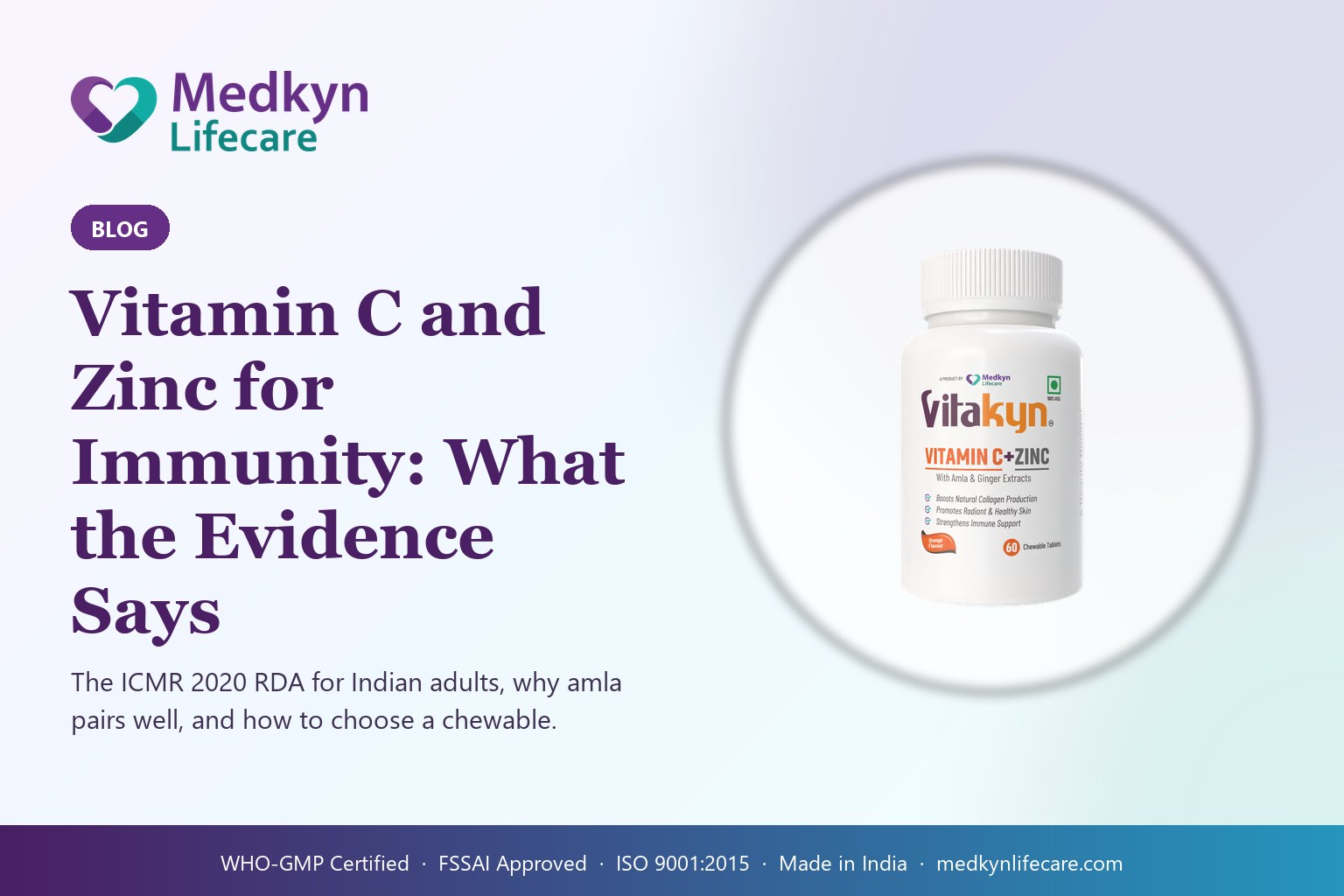
- Chewable tablets (like Vitakyn's orange-flavoured tablet) suit people who dislike swallowing pills, including older adults and teenagers. They start dissolving in the mouth, so flavour and sugar content matter — check the label for the declared sugar per tablet (Vitakyn declares 0.00 g).
- Swallow tablets are cheaper to make and easy to carry, but offer no advantage in absorption.
- Effervescent tablets often contain 500–1000 mg of vitamin C plus a large sodium load from the fizzing base — a point worth knowing for anyone watching blood pressure.
How to take vitamin C and zinc
One tablet a day with or after a meal is the standard direction. Zinc taken on an empty stomach can cause mild nausea, and vitamin C is absorbed just as well with food. Zinc competes with iron and copper for absorption, so if you also take an iron supplement, separate the two by a few hours. Long-term zinc intake well above the RDA can lower copper status — another reason to prefer near-RDA products for daily use rather than high-dose "immunity boosters".
Who benefits most
People eating a largely cereal-based vegetarian diet, smokers (who need roughly 35 mg more vitamin C per day), older adults with reduced appetite, anyone recovering from illness, and people who simply do not eat fruit daily. Children, pregnant women and anyone with kidney disease should take zinc-containing supplements only on medical advice.
Where Vitakyn Vitamin C + Zinc fits
Vitakyn Vitamin C + Zinc with Amla and Ginger is a 60-tablet, orange-flavoured chewable supplying 65 mg vitamin C, 13 mg zinc, 1000 mg amla extract and 10 mg ginger extract per tablet — 100% vegetarian and manufactured under WHO-GMP and FSSAI standards for Medkyn Lifecare, Ahmedabad. It is available on Amazon and Flipkart and to pharmacies and distributors across India.
Frequently asked questions
Does vitamin C prevent colds?
For most people, no. Reviews of dozens of trials find that regular vitamin C intake does not reduce how often the general population catches colds, though it modestly shortens their duration and severity. People under heavy physical stress see a larger effect. Taking vitamin C only after symptoms start shows little benefit, so steady daily intake is the sensible approach.
How much zinc per day is safe for adults in India?
The ICMR-NIN 2020 RDA is 17 mg per day for adult men and 13.2 mg for adult women. Supplements in India are expected to stay within these values. Taking zinc well above the RDA for long periods can interfere with copper absorption, so near-RDA products such as Vitakyn Vitamin C + Zinc (13 mg) are designed for daily use without exceeding safe limits.
Can I take vitamin C and zinc together?
Yes. Vitamin C and zinc do not interfere with each other and are commonly combined in one tablet. Take the tablet with or after a meal to avoid the mild nausea zinc can cause on an empty stomach, and separate it by a few hours from any iron supplement, since zinc and iron compete for absorption.
Is Vitakyn Vitamin C + Zinc vegetarian and sugar-free?
Yes on both counts. The tablet is 100% vegetarian and the nutritional panel declares 0.00 g sugar per tablet; the orange flavour comes from permitted flavouring. It is a chewable tablet supplying 65 mg vitamin C, 13 mg zinc, 1000 mg amla extract and 10 mg ginger extract, in a pack of 60.